
Overview
This guide walks through pointing Microsoft Power BI Desktop at the Chime reporting API so you can build a service-desk dashboard that refreshes on its own. Anything available as a CSV inside the Chime admin console can be pulled the same way — queue basics, agent efficiency, performance, text analytics, bot performance, and so on.
Before you start
You’ll want two prerequisites in place:
- A working API key. The Chime reporting API post walks through generating one from Admin › People.
- Power BI Desktop installed locally. Grab the latest build from Microsoft’s Power BI downloads page.
Option 1: Blank Query + Advanced Editor
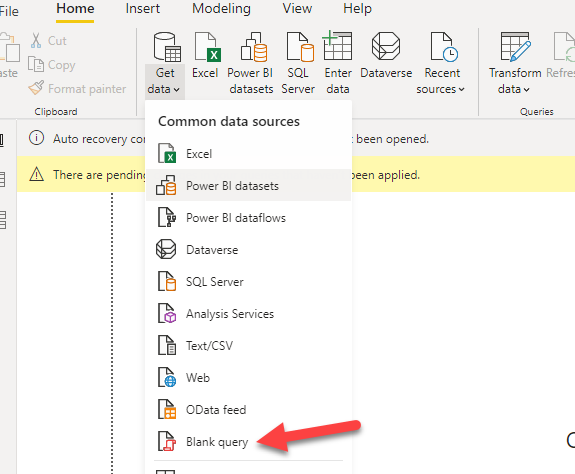
The simplest path is to paste an M-language query into the Advanced Editor. In Power BI Desktop, click Get Data › Blank Query:
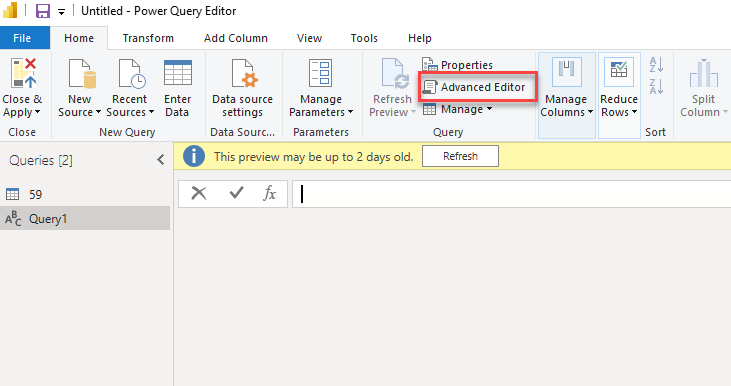
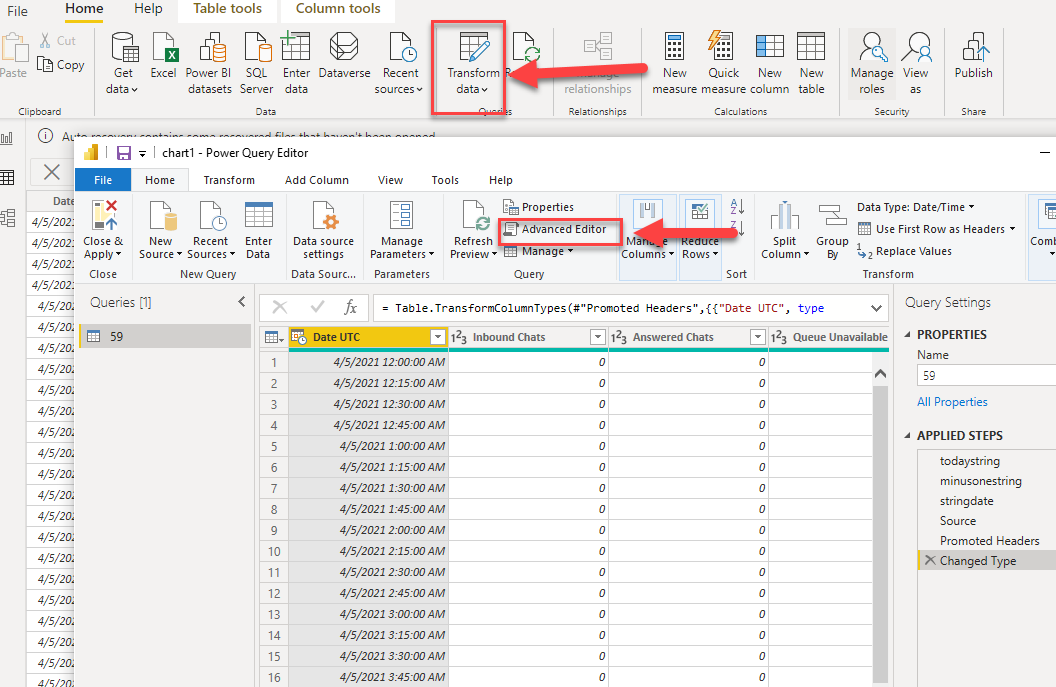
On the resulting query, open Advanced Editor and replace the body with a single Web.Contents call, passing your bearer token in the headers:
Web.Contents call.let
Source = Web.Contents(
"https://ch-teams-net1.imchime.com/Chime/Report/InboundVsAnsweredChats?queueId=1&start=2020-11-01T04:00:00.000Z&stop=2020-12-01T04:59:59.999Z&csv=true",
[
Headers = [
#"Method" = "GET",
#"Authorization" = "Bearer <YOUR-API-KEY>"
]
])
in
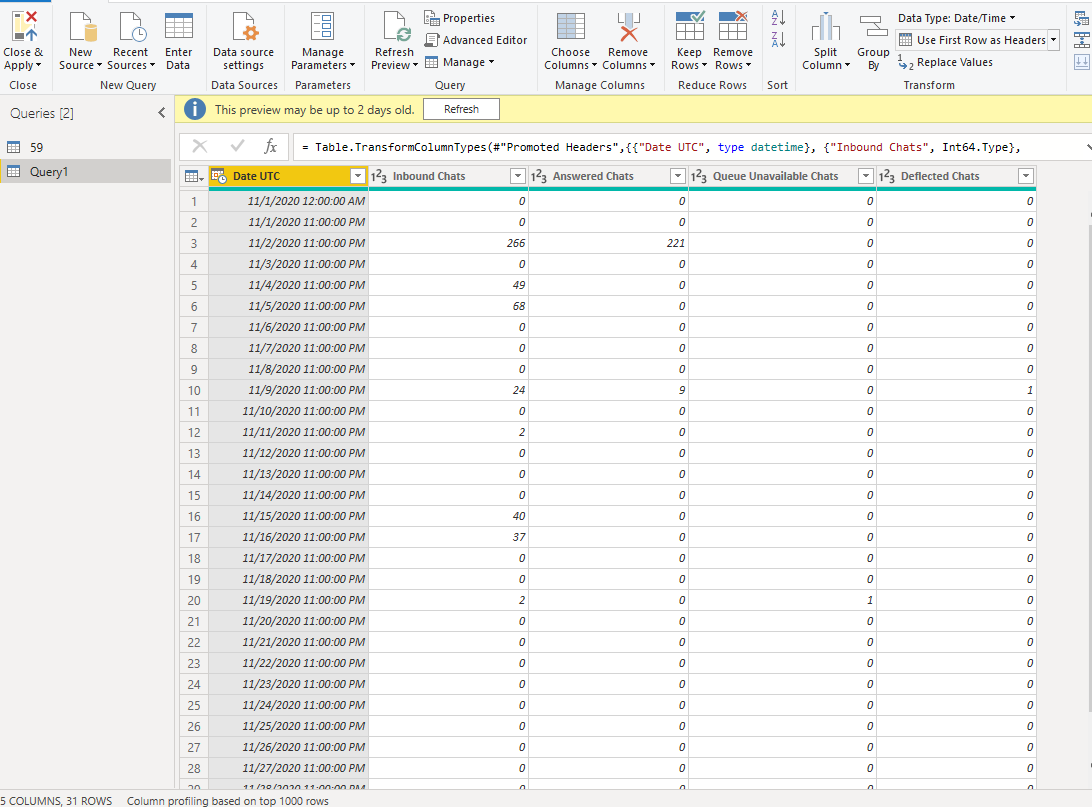
SourceClick Done, then To Table › Use First Row as Headers, and the CSV body comes back as a typed Power BI table:
Option 2: Web data source
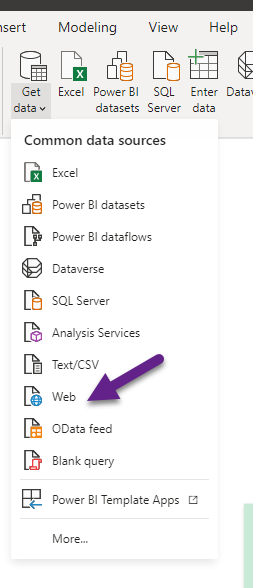
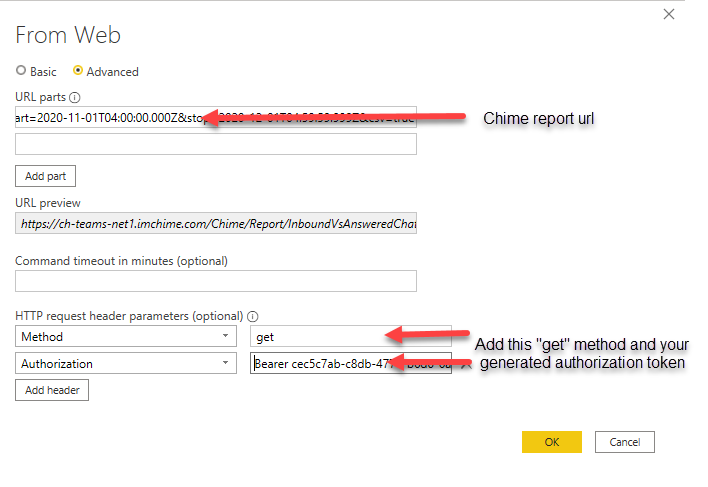
If you prefer the UI to the M editor, the Get Data › Web data source can do the same thing. Switch to Advanced, paste the endpoint into URL parts, leave the method as GET, and add an Authorization header:
Make the date range dynamic
The query above is pinned to a fixed window, which means the dataset will go stale on the next refresh. The fix is to compute start and stop at query time. The snippet below builds yesterday-to-today strings and concatenates them into the URL:
let
    todaystring     = Date.ToText(DateTime.Date(DateTime.LocalNow())),
    daybeforestring = Date.ToText(DateTime.Date(Date.AddDays(DateTime.LocalNow(), -1))),
    chimeServer     = "https://ch-teams-net1.imchime.com",
    queueId         = "1",
    url = chimeServer
        & "/Chime/Report/InboundVsAnsweredChats"
        & "?queueId=" & queueId
        & "&start=" & daybeforestring & "T00:00:00.000Z"
        & "&stop="  & todaystring     & "T23:59:59.999Z"
        & "&csv=true",
    Source = Web.Contents(url, [
        Headers = [
            #"Method"        = "GET",
            #"Authorization" = "Bearer <YOUR-API-KEY>"
        ]
    ])
in
    Source
From here you can use the same technique to build rolling-week or month-to-date variants — anything you can compute as a string of ISO-8601 timestamps:
Publish
Once the report looks right in Power BI Desktop, use Publish to push it to a Power BI workspace. Scheduled refresh on the workspace will then keep the dashboard in sync with whatever the Chime API returns.