
Overview
The Chime Reports Extraction Utility is a small Windows app that wraps the Chime reporting API and dumps the results to your local disk. It is the right tool if you want a nightly archive of CSVs for ETL or audit, but you don’t want to write a custom script.
You point it at one or more queues, pick the reports you care about, and it pulls them back across a date range you specify. The same executable can run unattended from a scheduler.
What you’ll need
- A Chime reporting API key (see the reporting API post for how to generate one).
- Your Chime server base URL, for example
https://www.example.com/chime. - The numeric Queue ID for any queue you want to report on.
Install and configure
- Download the latest release archive from the Azure DevOps repository and unzip it somewhere stable on disk.
- Run
ChimeExtractionUtil.exefrom the unpacked folder. - Fill in your Chime server URL, your API key, and the queue IDs, then press Save:
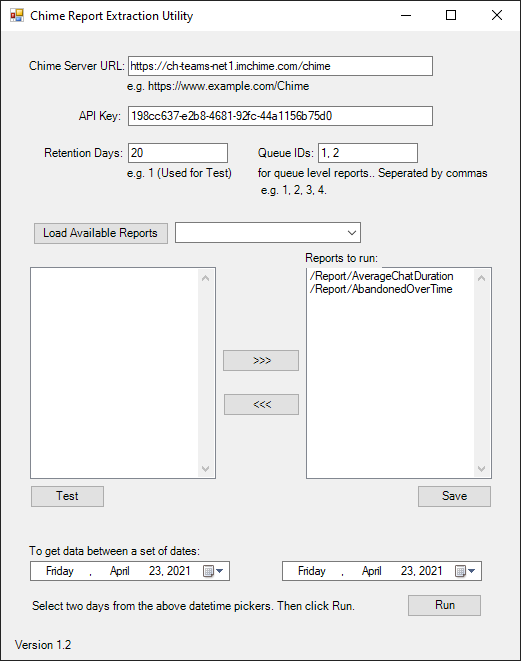
Pick the reports you want
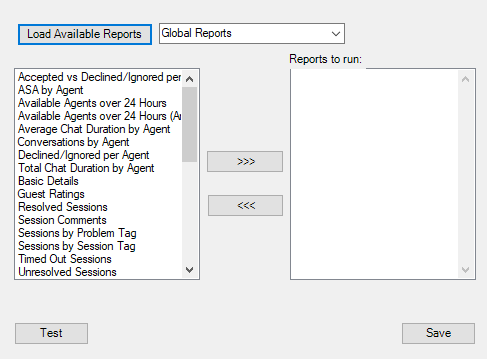
With the configuration saved, choose which reports to pull from the dropdown and click Load Available Reports — the utility queries the server to figure out what’s available for that queue:
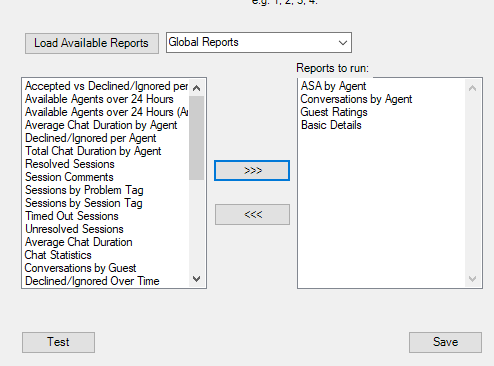
Highlight the rows you want and click the >>> button to stage them for extraction:
Pick a date range and run
At the bottom of the window, pick a From and To date with the calendar controls and hit Run. The CSVs land in the utility’s output folder, named by queue and report:
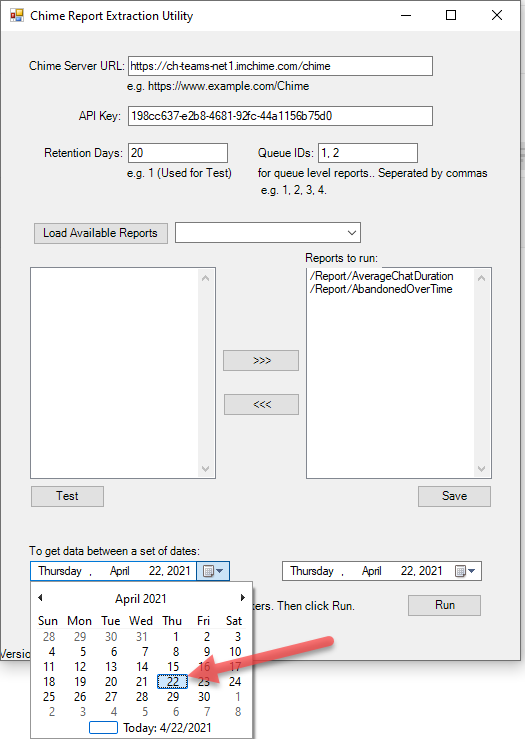
start and stop sent to the API.Running it from the command line
The utility also exposes a one-argument command-line form, which is what you wire into Windows Task Scheduler for unattended runs. The argument is the number of days to look back from today, so the example below pulls the last day:
start ChimeReportingUtil.exe 1
Where to go next
If you’d rather render the same data live than archive it as files, the Power BI walkthrough points the same API at a Power BI Desktop workbook with a dynamic date range.